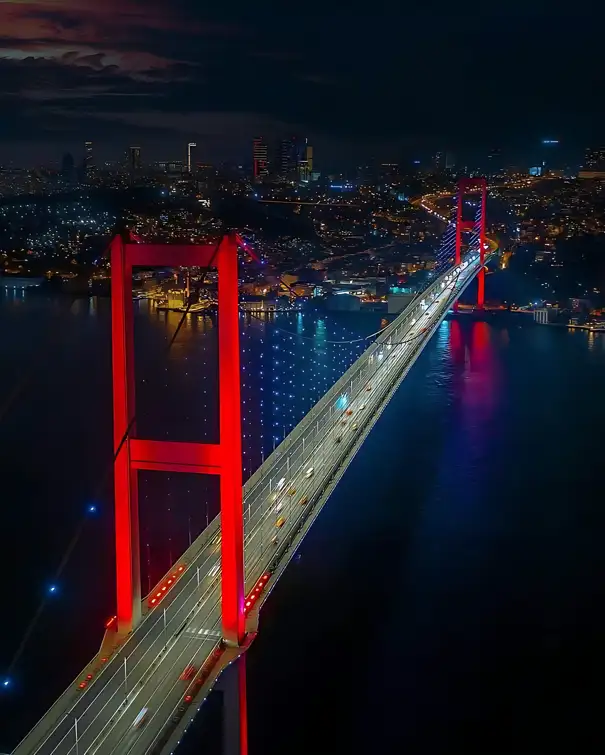
Most of Istanbul's daytime energy is built around getting somewhere — through traffic, up a hill, across a bridge. After dark, that same city empties out into something closer to stillness. The minarets catch light against a darkening sky, the Bosphorus goes from blue to black to a kind of shimmering ink, and the pace of everything just... drops.
Why nighttime works differently here
Istanbul during the day is built for productivity and movement. At night, the rhythm changes entirely — traffic softens, conversations get longer, and the city stops asking anything of you. It's less a party scene (though that exists too, elsewhere) and more a genuine reset, the kind of quiet that's hard to find during business hours in a city of 16 million people.
Where the calm actually lives
A few regular spots worth knowing: a tea garden with no sign, tucked into a side street where the only light comes from the shopfronts around it. A bench near the water where the ferry traffic becomes something to watch rather than something to catch. These aren't secret in the sense that no one knows about them — they're just quiet enough that most people walk past without stopping.
If you're planning your own evening
- Stick close to the Bosphorus for the coolest air and best skyline views.
- Bring a light jacket even in summer; the humidity near the water shifts fast after sunset.
- Night ferries are underrated as transport and as a way to see the coastline from a different angle.
- Moda and Kuzguncuk are worth wandering after dark specifically — residential enough to feel lived-in, not staged for visitors.
The city doesn't owe you constant motion. Some of its best moments happen when it's allowed to just be quiet for a while. For more ideas on where to spend your evenings, the full guide to Istanbul's night activities has the rest.