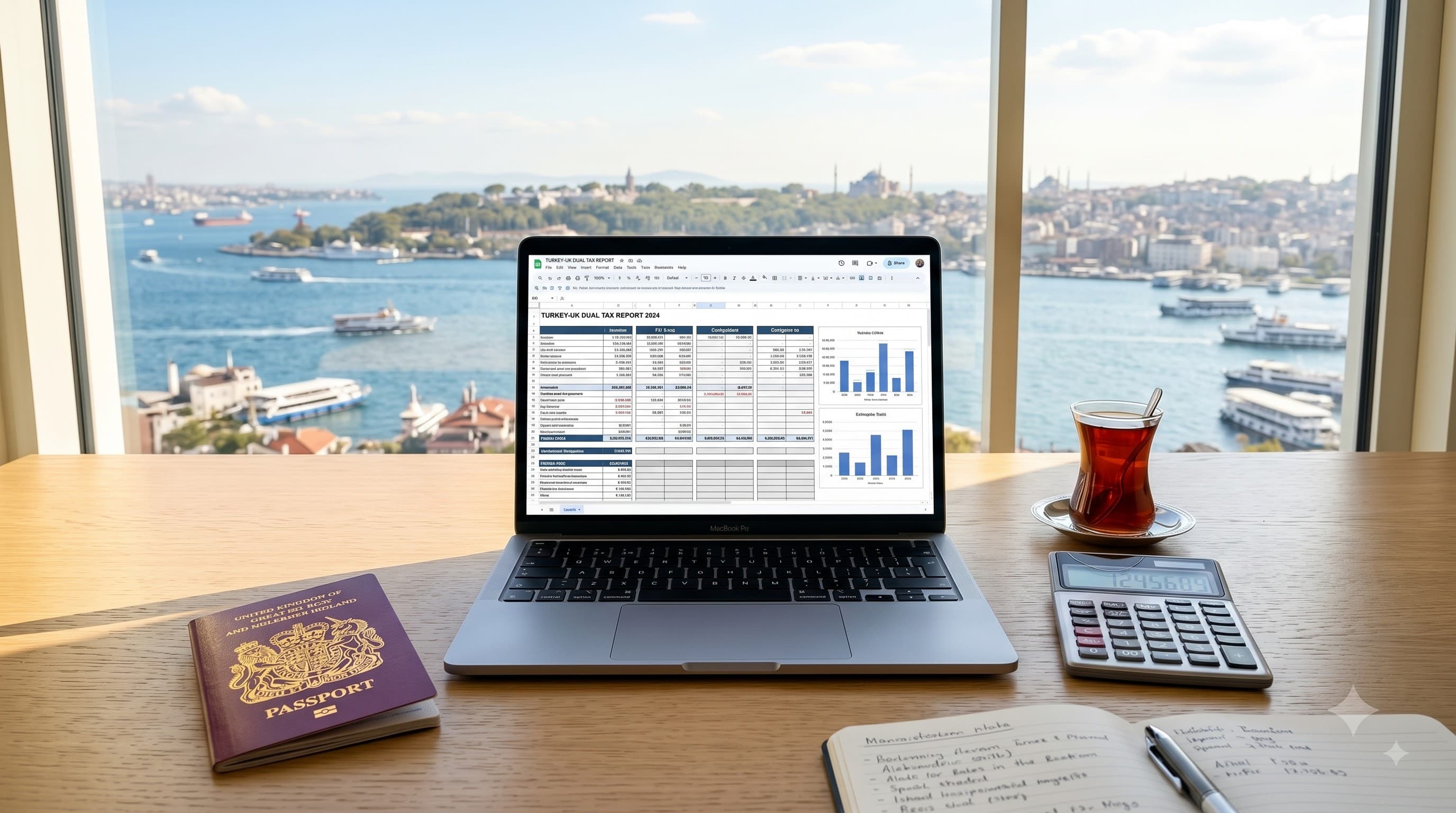
*Orientation only — get a real cross-border tax consultation.*
For US citizens: know that citizenship-based taxation doesn't disappear when you move
The US taxes citizens on worldwide income regardless of where they live — moving to Turkey does not end your US filing obligation. You'll likely still need to file an annual US tax return, even if you owe nothing after applying available exclusions and credits.
Step 1 (US): Understand the Foreign Earned Income Exclusion
The FEIE allows US citizens meeting either a bona fide residence test or a physical presence test (330 days outside the US in a 12-month period) to exclude a meaningful amount of foreign-earned income from US tax. The exact threshold changes annually — confirm the current figure with a cross-border tax preparer rather than an outdated blog post.
Step 2 (US): Know about FBAR and FATCA reporting
If your Turkish bank account balances exceed certain thresholds at any point in the year, you likely have separate FBAR (FinCEN Form 114) and possibly FATCA reporting obligations — these are reporting requirements, not necessarily tax bills, but the penalties for not filing when required are genuinely severe. Don't skip this because 'nothing was owed.'
For UK citizens: understand the Statutory Residence Test
Unlike the US, the UK taxes based on residence, not citizenship. Whether you remain a UK tax resident while living in Turkey depends on the Statutory Residence Test — factors include days spent in the UK, ties to the UK (family, property, work), and your specific circumstances.
Step 1 (UK): Establish your residence status clearly
If you genuinely cut UK residence ties and meet the test's non-resident criteria, UK tax generally shifts away from your worldwide income. This determination has real financial consequences and genuinely depends on specifics — get it confirmed properly rather than assuming.
Step 2 (UK): Check the UK-Turkey double taxation treaty
A double taxation agreement between the UK and Turkey exists to prevent the same income being taxed twice — understanding how it applies to your specific income sources (employment, self-employment, investment) is worth a direct conversation with an advisor familiar with both systems.
*This article is orientation, not tax advice. Cross-border tax situations are genuinely case-specific — get a consultation with an advisor who handles both your home country's rules and Turkish tax residency together, not two separate advisors working in isolation from each other.*